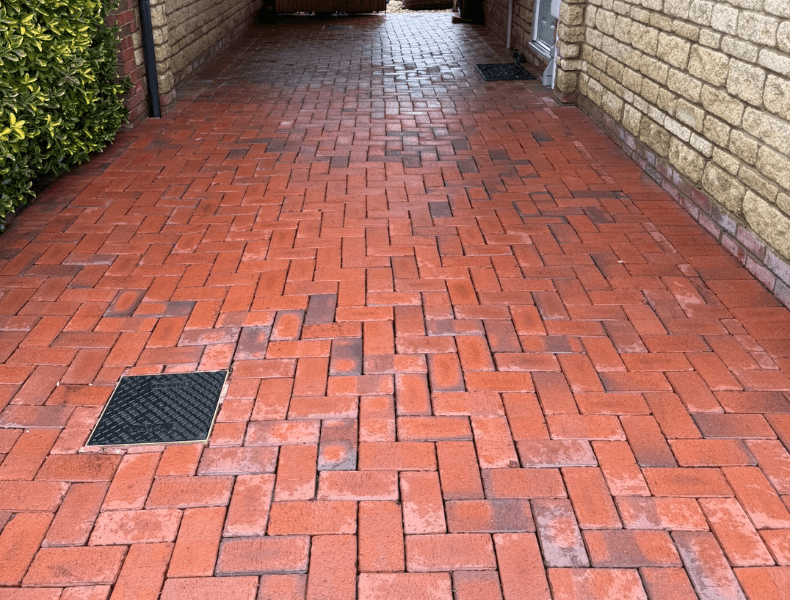
Sealing a driveway is the difference between a clean that holds for years and one that needs redoing every spring. But sealer isn't free, and not every surface benefits. Here's the honest case for and against.
What sealing does
A driveway sealer is a clear or tinted polymer that bonds to the surface of block paving, concrete, or natural stone. It blocks the pores so moss can't establish, locks the jointing sand in place, and stops oil and tyre marks from soaking in.
When to seal
- Right after a deep clean and re-sand — that's the only window where the surface is genuinely ready.
- Block paving with deep joints that you want to keep weed-free and stable.
- South-facing or exposed driveways where UV is fading the colour.
- Heritage natural stone (limestone, sandstone) that's porous and at risk from chemical staining.
When not to bother
- Tarmac driveways — they need a tarmac restorer, not a sealer.
- Driveways with structural problems (sinking, weed-infested joints, broken blocks) — fix the surface first.
- Patios that don't get heavy use and aren't bothered by re-cleaning every year or two.
How long does it last?
A solvent-based polymeric sealer typically lasts 2–3 years on a driveway. We use a high-spec sealer that holds the joints, blocks moss regrowth, and gives a subtle satin finish without that wet-look glare some products leave behind.
Ready to sort yours?
Talk to James about sealing →